


15+ Small Business Software Statistics That Matter in 2026
Let’s start with the uncomfortable truth: small businesses don’t usually fail because of bad strategy. They fail because execution breaks down.
In 2026, business apps, especially productivity tools, will play a huge role in efficient execution and data-driven decision-making. So, breaking down some of the most interesting small business software statistics could help us to understand the key metrics and easily decide what you should focus on.
Let’s dive in!
ERP Software Statistics for Small Businesses
In the first section, I will show you some powerful insights on how small businesses are increasingly treating ERP as fundamental infrastructure rather than optional software.
62% of small business ERP implementations report cost savings
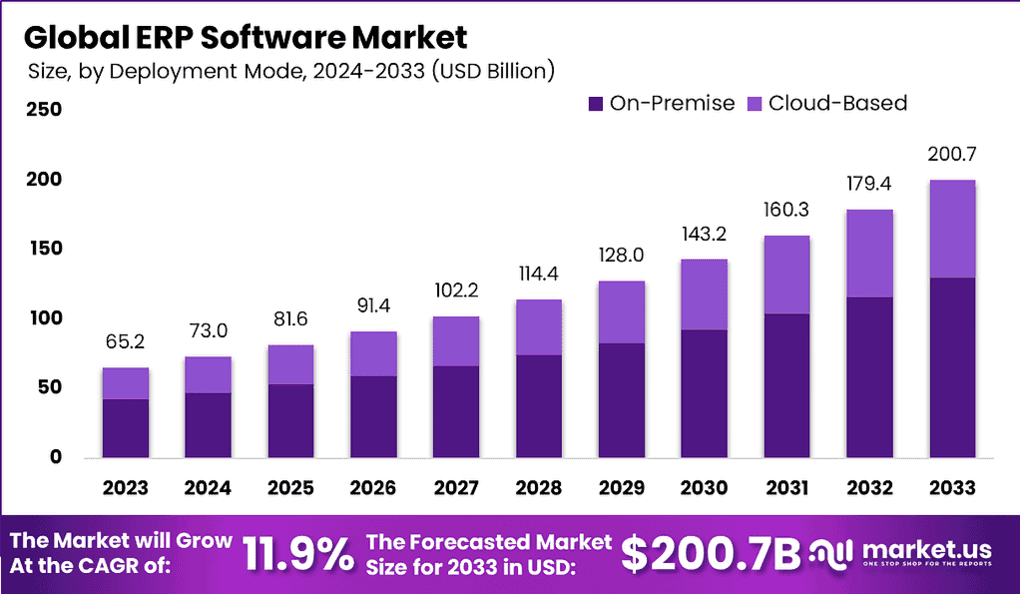
If we base our premises on Sci-tech’s report, then it’s safe to say that ERP systems are positively impacting financial outcomes. After all, 62% of survey respondents categorically said that ERP saved substantial costs, especially in purchasing and inventory management.
What does this mean for a small business owner? It means it is crucial to choose a top ERP software for small businesses that allows small teams to scale efficiently without overinvesting upfront, for example, MRPeasy. These tools help managers focus on essential planning and inventory controls before layering on complexity.
Cloud ERP shortens implementation timelines
Likewise, in the Parsimony 2025 report, cloud ERP implementations now take from 3 to 9 months as opposed to 6 to 12 months for legacy systems. As a result, ROIs are being realized within a short time frame, enabling companies to use the standardized workflows faster.
Small businesses trying to manage their speed while keeping costs under control may be strongly influenced by the idea of faster growth, which, in fact, might be a game-changer.
83% of ERP projects met ROI expectations
According to Market.Biz data, it was found that among companies that carried out an ROI analysis before launching their projects and have been live for over a year, over 83% reported that their ERP projects met or surpassed their ROI expectations.
Such data insights are crucial. If you’re an SME that evaluates ERP ROI upfront, you’re far more likely to see measurable returns, proving planning matters as much as the software itself.
More than 80% of SMBs use ERP systems to stay competitive
Still not convinced of the viability of ERP? Then you might want to check this data from Research.com. The ERP market reaching $147.7 billion in 2025 wasn’t a mere coincidence. It’s driven by the urgent need for businesses to stay relevant.
As a matter of fact, over 80% of SMEs with annual revenues below $50 million adopted ERPs to have a competitive advantage. This further reflects the value of these tools when efficiency and growth are of the essence.
Related articles:
HR & Workforce Software Statistics
Only an HR team will fully understand the complexities associated with administration. It gets overwhelming at some point, particularly for large enterprises. The collected detailed insights below demonstrate how SMEs are using HR software to lessen the administrative burden and improve workforce management.
65% of small businesses use HR software
No matter how tedious HR tasks are, SMBs still have to keep up. This accounts for the results from Biz4Group 2025 data. It was found that 65% of small U.S. businesses have adopted HR technology. Payroll, leave tracking, time tracking apps, and compliance modules replace spreadsheets without replacing staff, creating time savings for lean teams.
This explains the paradigm shift toward the adoption of the top HRIS software for small businesses and prominent options like Agendrix, which enables small teams to manage employees efficiently and scale operations.
Over 50% of SMBs use HR tech for payroll and recruitment
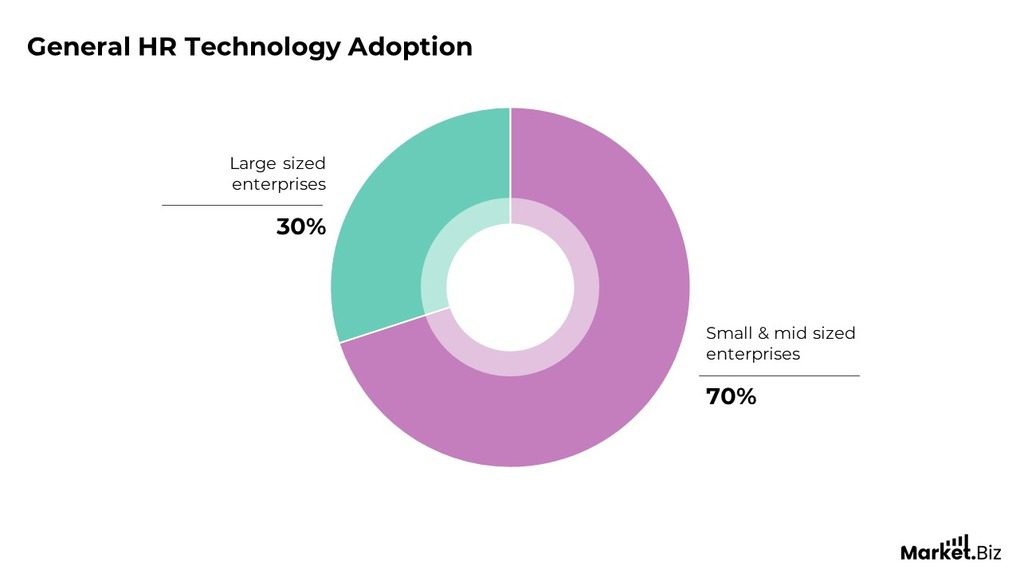
In another report from the Market.Biz 2025 survey, payroll, recruitment, and performance tracking systems ranked highest as the most common applications of HR technology. In fact, more than half of SMEs have adopted HR software to escape risks of non-compliance, reduce administrative work, and improve the employee experience.
The bottom line is that SMEs may be able to save hundreds of hours per year through the use of automation in payroll and recruitment.
Cloud-based HR solutions account for 60% of the market
As the hype surrounding ERP systems increases, the HR Software Market 2026-2035 reports revealed that nearly 60% of HR software solutions are hosted on the cloud. Small businesses have a lot to gain from this: scalability, the ability to work from anywhere, and less expensive hardware.
If the trend continues, there’s no doubt that cloud-based HR systems will be at the core of SMB workforce management in 2026.
Almost 40% of HR tech spending comes from small businesses
If you’ve ever had that gut feeling that SMBs are becoming the growth engine of the HR tech market, perhaps it’s time to confidently make that assertion. SaaSworthy’s analysis clearly states that 38% of all HR tech spending was traced back to small businesses.
This sudden shift is driven by innovation and the urgent demand for automated workflows, compliance, and team efficiency. SMBs that are quick to take the initiative will record greater retention and hiring outcomes.
Customer Feedback & Consumer Insight Software Statistics
Customers are the lifeline of any business. Only those companies that focus on meeting changing market demands & always improving customer interactions will maintain top-flight in the coming year. But what do the small business software statistics look like in this industry?
Scroll down, because I collected some deeper insights for the customer-related statistics.
Nearly 60% of surveys are completed on mobile devices
Since this era is marked by digital transformation, SurveyMonkey found that almost six in ten survey responses are done through mobile devices.
For small teams, top survey platforms for consumer insights or tools like Attest help fast-track customer feedback. They say mobile devices are the main reason why the number of participants in the survey increases. As such, the insights gained are more representative.
Moving forward, there’s every tendency that a mobile-first survey design will be the factor that separates those who gain actionable insights from those who do not in 2026.
Furthermore, using artificial intelligence-driven tools, you can perform more advanced data analysis to extract key insights from complex data.
80% of US surveys have become multilingual
In the past decade, multilingual surveys have seen a significant increase. According to the data gathered by SurveyMonkey, 8 out of 10 surveys in the US have multiple language options: French, Chinese, Spanish, Japanese, and Korean, to name a few.
With these, businesses, especially startups and SMEs, can ask questions that are easily understood by their audience and get accurate feedback that actually demonstrates how customers really feel.
AI-related HR surveys grew 85% on SurveyMonkey
We gathered from SurveyMonkey’s State of Surveys 2025 report that there has been a significant increase in the number of artificial intelligence-related HR surveys. This can only mean one thing: structured feedback could be the standard way of making decisions in lean HR teams.
It turns out that SMBs are using surveys in more ways than one. Besides getting the feel of the employees, they’ve been able to spot skill gaps that exist in their teams and identify the need for employee training. Such tools can help with data analytics, visualization, and more to gain insights.
Millions of questions move through SurveyMonkey annually
Data is an extremely viable tool for business success, and teams are exploiting it to stay decisive and flexible. Based on reports from SurveyMonkey corporate data, millions of questions flow through for responses each year. Companies then use the answers gained from these to track trends like tariff policies and consumer sentiment.
Small businesses or startups have a lot to gain from this. Working with data-driven insights can improve product quality and service decisions.
Explore our Apps directory
A curated directory of software tools we’ve independently reviewed, with links to full reviews, comparisons, and category guides.
Project Management & Productivity Software Statistics
One thing we’ve come to realize in recent years is that manual workflows aren’t the most efficient anymore. Using business applications for automation and productivity is the real deal.
The small business software statistics here uncover some fascinating trends about how organizations are actually managing projects and collaboration.
41% of Small businesses use AI project management tools
In Thryv’s 2025 survey, Small businesses are reported to be more inclined to use tools such as Asana, Trello, and ClickUp for the management of hybrid workflows. This increased the AI adoption rate by 41% and is said to be a main factor for improved task visibility and team alignment.
By means of a simpler project management tool, the team can avoid the risk of expensive misalignment when the team is growing.
Related articles:
- 8 Best Project Management Software In 2026 | +25 Apps Tested
- 35+ Mind-Blowing Project Management Statistics for 2026
- 6 Best Jira Alternatives | 25+ Personally Tested Apps (2026)
- 6 Best ClickUp Alternatives | +25 Apps Tested (2026)
37% of SMBs use performance management modules
According to Biz4Group, SMBs are massively adopting performance management systems. These tools can actually play a crucial role in tracking goals, assessing productivity, and tying outcomes to incentives, improving retention and engagement.
As over one-third of SMBs have adopted performance management, it’s a signal that small businesses are thinking beyond day-to-day operations toward long-term retention.
Tech investments are rising across small business functions
According to the Verizon Business State of Small Business Survey, 38% of SMBs utilized AI for marketing, recruiting, and customer service, and 47% improved their cybersecurity in 2025, indicating that businesses are adopting more technologies beyond their basic software stacks.
It’s evident from this that the use of project and productivity tools will require them to be linked with security and automation layers to be efficient.
AI tools help SMBs save time and money
AI automation has one significant benefit: speed. The Thryv small business AI adoption survey points out that numerous SMBs leveraging AI are announcing that they save time more than 20 hours monthly and save costs ranging from $500 to $2,000 every month.
The fact that automation is transitioning from a niche to a baseline behavior indicates that the 2026 workflows will consider AI as a support for routine operations.
Related articles:
- 15 Best AI Tools | 200+ Apps Tested By A Skeptical (2026)
- 7 Best Productivity Apps I Use In 2026 | 100+ Tools Tested
- Best 9 AI Note-Takers | My Top Picks After +2 Years Testing (2026)
- 5 Best Bot-Free AI Note-Takers In 2026 (NOT What You’d Think)
- 27+ Surprising AI Assistant Statistics You Must Know in 2026
- +30 REAL AI Statistics For 2026 (What No One Tells You)
Small Business & SaaS Adoption Statistics
The numbers indicate that technology adoption is no longer reactive for SMBs; it’s becoming a deliberate, strategic choice in 2026.
Let’s take a closer look at the implementation of the SaaS applications!
Technology use is widely planned among SMBs
According to a tech report on small businesses by the U.S. Chamber of Commerce, 84% of small businesses intend to ramp up their utilization of tech platforms, such as automation, AI, and digital workflows, which is a clear indication of substantial investment in the future.
This purposeful tech adoption by SMEs is, in essence, an operational management priority rather than merely a growth tactic, 2026 and beyond.
78% of small businesses have invested in SaaS solutions
According to the SaaS Adoption Statistics by Meetanshi Technologies, an astounding 78% of small businesses have invested in SaaS solutions. This means that the integration of SaaS has become almost seamless across the different functions like finance, HR, and operations.
SaaS has ceased to be a revolutionary tech; the majority of SMBs are dependent on cloud apps for the execution of their core processes. In 2026, companies that evaluate SaaS holistically will unlock better integration and lower overhead.
The SaaS market will reach $1.25 trillion by 2034
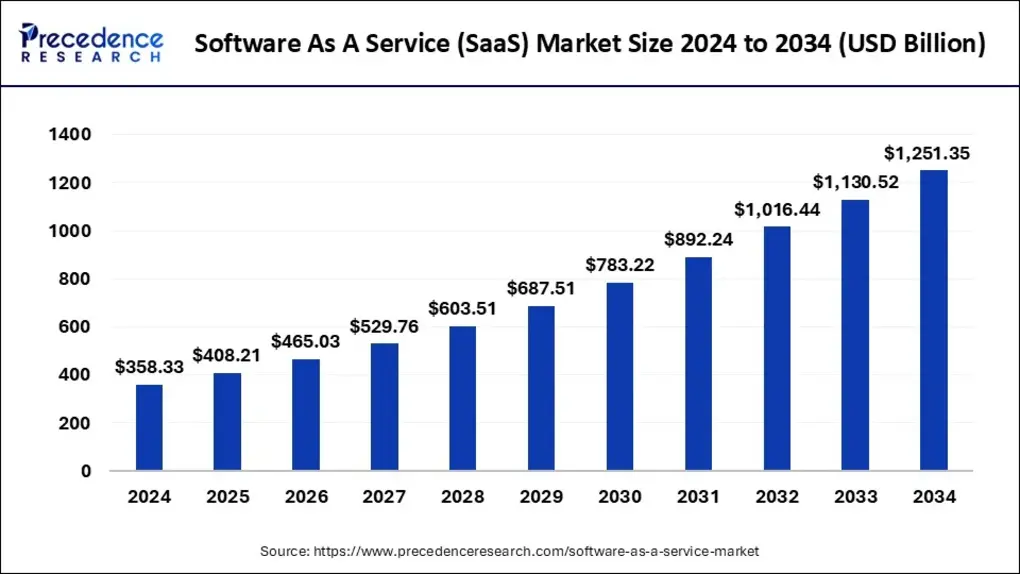
What’s the reality behind growing SaaS adoption? 2025 was a blast, and the market size was estimated at $408.21 billion. As it stands, Precedence Research has forecasted the global SaaS market to reach $1, 251.35 billion by 2034. That’s a staggering CAGR of 13.32%. This is a result of the unending demand for tools that are scalable and budget-friendly.
Amidst these numbers, rapid SaaS growth means small businesses are set to enjoy affordable, scalable, AI-powered tools that facilitate innovations and easy integrations.
Global SaaS spending was estimated at $300 billion in 2025
SaaS adoption has been the trend in recent years. Based on Gartner’s worldwide cloud spending forecast, SaaS spending was expected to reach $299,071 billion in 2025. This shows that companies are getting more intentional about what cloud infrastructure and CIPS could do for them.
If you manage a small team, the numbers signal that cloud software is becoming cheaper and even more competitive. So, focus on investing in SaaS systems in 2026, as early adoption has a greater and long-term advantage.
Key Takeaways From Data Insights for Small Business Owners
Small businesses are being more deliberate about software adoption. Choices are mainly influenced by costs, return on investment, and real business effects, rather than following trends. Modular, cloud-based solutions are winning by far, in one package, thus SMBs get the freedom and the possibility to grow without the risk of too much complexity.
Making decisions based on data is now the minimum that must be done, whereas simple HRIS and project management tools help to increase both productivity and employee loyalty.
Wrap-up: Small Business Software Statistics for 2026
Firstly, executives must review their software ecosystem based on different categories such as ERP, HR, project management, survey, and finance automation tools. To get the most out of efficiency, a company needs to focus on cloud solutions, system integration, and mobile accessibility.
Related articles:
- 25 Eye-Popping Time Management Statistics 2026
- 18 Productivity Apps Statistics You Need to Know in 2026
- 13 AI Productivity Statistics That Will Blow Your Mind For 2026
At the end of the day, it should be a business objective to employ well-organized consumer insight and survey data to not only confirm their assumptions but also to adjust their strategy and make sure that their software investments are generating tangible returns for the business.
Frequently asked questions
What’s the best software for a small business?
It’s a tough question since it depends on what they actually need. It can be analytics tools, productivity apps, or AI-powered software applications.
Here are our must-have apps that all small business owners need:
- Toggl Track to track time and productivity
- Monday.com to manage projects
- Fellow for AI note-taking
- Tenorshare PDNob for PDF editing
- Notion for knowledge management
- Xodo Sign for esignatures
- Missive for email management and collaboration
Which software is best for business analytics?
Probably the most popular and easy-to-use option is Microsoft Power BI Premium. It helps a lot in data visualization and provides some useful data analytics tools.
How to measure small business performance?
I recommend using some tools to track KPI’s. Some business apps you can use for this are project management apps.
You can check out the project management app library here to find the best one for you.

Hey there! I am Aron, the founder of Thebusinessdive. I have been testing productivity apps for almost three years now. I reach 25.000 -50.000 people monthly with the mission to help you find the perfect productivity apps. Subscribe to my YouTube channel, newsletter, and social media to hear more about the best productivity tools. Let’s dive in!