



Angel Investor Vs Venture Capital: The Ultimate Guide For Startups
Most startup founders reach the point when they need additional financial sources, and bootstrapping is not enough. Whether it is developing an MVP, attracting new customers, or simply boosting growth, raising money can arise for various reasons. This is when angel investors and venture capital firms (VC firms) can enter the scene to provide the necessary financial support. But here’s the catch: how do we decide when it comes to an angel investor vs. venture capital discussion?
Financing options for startups
Startup founders have various ways to secure money for their businesses. The decision to choose which strategy to follow depends on multiple factors. In general, there are two financing options: debt and equity.
Debt financing refers to acquiring money for your business from external sources without giving up equity, for instance, loans.
In contrast, equity financing is when you sell equity in your business to investors in exchange for capital. The most common equity financing options at early-stage companies are angel or venture capital investors.
The path until an early-stage company can receive money is full of challenges. Finding an angel or venture capitalist can be awfully hard.
The first step is to evaluate all available funding options’ pros and cons to ensure that you make the right decision. After, you just need to be persistent.
Who is the angel investor?
Angel investors are typically high-net-worth individuals looking to invest their own money into promising startups.
Angels provide financial support and guidance to early-stage companies in exchange for equity. They often bring valuable angel networks, knowledge, and experience to the table.
Early-stage funding is a risky move. Although angels know this, they typically look for a higher rate of return than traditional investment options.
Who is the venture capitalists?
Venture capital investors are typically not individuals but rather firms. Unlike angel investors, venture capital firms do not manage and invest their own money. Venture capital firms raise money from institutional investors, corporations, and wealthy individuals, known as Limited Partners (LPs). If the venture capital firm’s pitching is successful, the LP could write million-dollar checks to the venture capitalist.
They expect the venture capital firm to invest that money in promising companies and get a substantial return. But who is the one that makes the calls behind the venture capital firm?
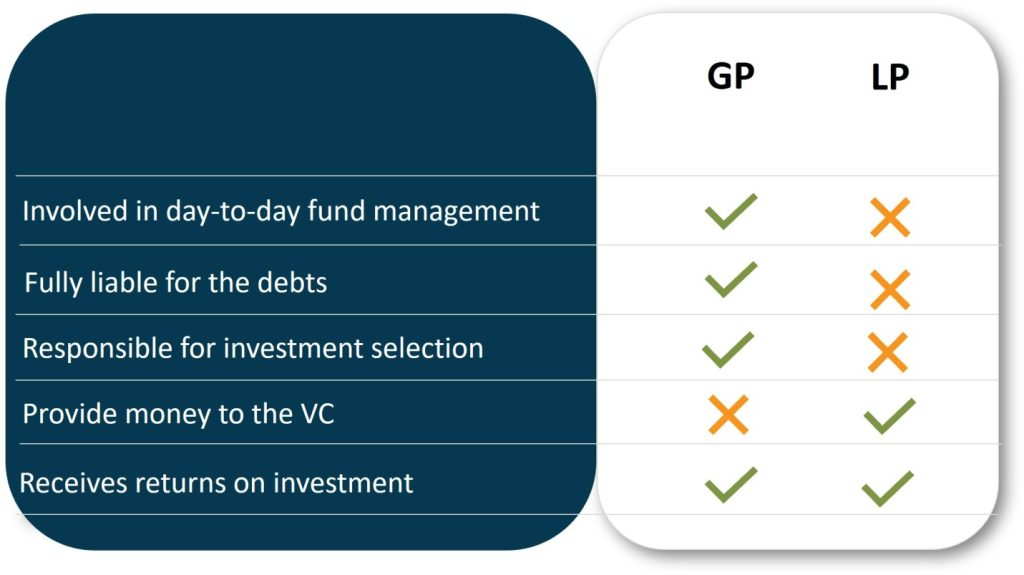
This person or company is called a General partner (GP). Contrary to LPs, the GP has an active role in managing the investments of the venture capital fund. The primary responsibilities of the GP are to raise funds, make investments and maximize the value of the portfolio companies.
Differences between angel investors and venture capital firms
Understanding the six key differences in angel investor vs. venture capital-related discussions is crucial.
The choice between the two depends on your specific goals, preferences, and the likelihood of successfully acquiring capital funds from either option.
Source of funds
Angels invest their own money, whereas venture capitalists get money from other investors. This fundamental difference in funding sources shapes the decision-making processes.
Angels have the autonomy to make investment decisions as they are using their own money. They have the freedom to choose which startup company to support based on their personal interests, expertise, and assessment of potential returns.
A venture capitalist has additional considerations and responsibilities. They must ensure that their investment decisions align with the expectations and requirements set by their investors.
So, the LPs of venture capital funds will also impact questions like when they want to get a return and possible exit options.
Stage of investment
Angel investors mainly invest in the pre-revenue stage. The startup in the pre-revenue stage may have an MVP but still needs traction and many customers. Many angels are taking a gamble with a high risk if the potential for a significant reward is on the table.
At a certain stage in the startup journey, there is an opportunity to seek investment from an angel and venture capitalist. This stage is typically when startups already acquired customers and started to make sales.
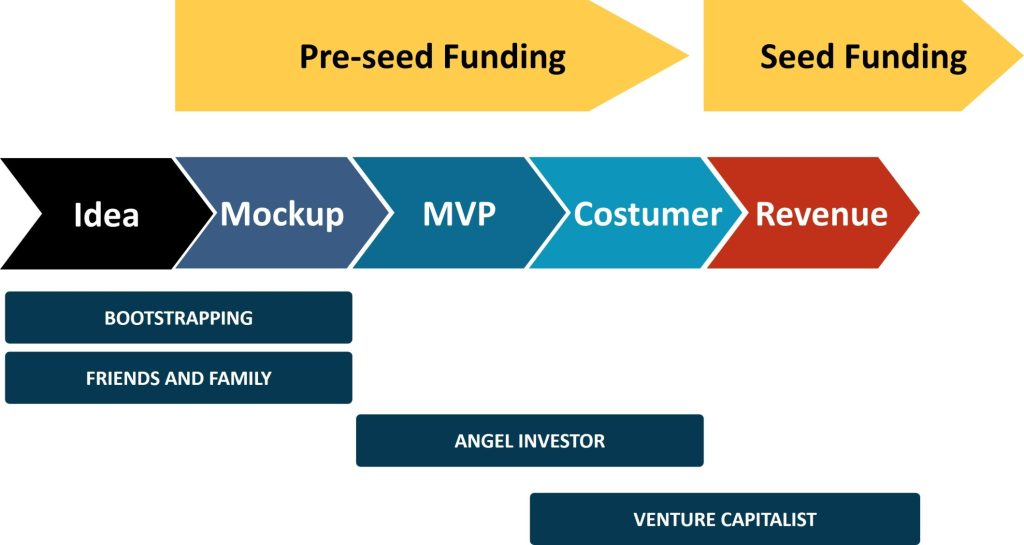
In general, a venture capital firm mostly invests in a startup which already reached some traction and acquired customers. There are some venture capital opportunities for startup companies at the pre-seed round, as some specific venture capital firms focus on early-stage funding.
Venture capital firms like Forum Ventures or 2048 Ventures fund early-stage companies and invest small amounts compared to later-stage investments. These venture capitalists often invest money within a particular industry or geographical location.
Control issues
It is a common misbelief that if a founder has an ownership greater than 50%, a venture capital firm can not control the portfolio company. The truth is there are two other ways how venture capitalists can control startup companies.
The venture capitalists can have a preferred stock that includes protective provisions. The bad news is that many vital decisions are subject to protective clauses. So, the venture capitalists must agree with such a decision.
Another way to control a company is through a board seat. Although it is not usual to negotiate a board seat at the pre-seed or seed stage, founders need to give board seats to investors at some point.
An angel usually does not have a board seat in general. Their involvement is focused on providing financial support and guidance rather than taking control of the startup’s decision-making.
On the other hand, venture capitalists actively participate in the decision-making by having a board seat in the portfolio company. It means they have higher control over the portfolio company, as founders need the board’s support when making important decisions.
Decisions like an initial public offering (IPO) or appointing executives to the company’s management team are typical situations when the board’s support is needed.
If they do not like the direction where the company is going, venture capitalists can remove founders or block the sale of the startup.
Investment size
An angel typically invests smaller amounts than venture capitalists, as they use their personal funds. The angel investment sizes can vary widely. It starts from $10 thousand to $250 thousand.
The average venture capital fund during pre-seed rounds in the US is approximately $500 thousand. However, it ranges between $100 thousand and $5 million. Meanwhile, the average seed funding round is around $5,6 million in the US.
Not just the volume of funds different, but also the requirements of the investors. While angel investment is often used for product development, venture capital is utilized for market expansion.
Startups usually seek venture capital investment at the stage when they have a PMF and are ready to scale their operations to reach more customers.